
Background information
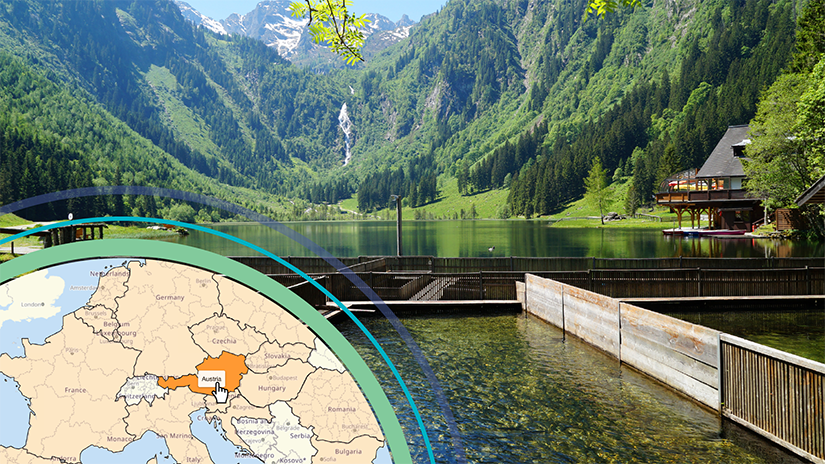
Type of species farmed
Rainbow trout (Oncorhynchus mykiss), brook trout (Salvelinus fontinalis), brown trout (Salmo trutta), Arctic char (Salvelinus alpinus) and common carp (Cyprinus carpio).
Source: 2025, STECF
Type of production method
Pond farming, flow systems and recirculating aquaculture systems (RAS).
Source: 2025, STECF
Sector’s size (production and consumption)
Source: 2024, EUMOFA; 2025, STECF
Trends (past and future)
Other innovative aquaculture products in Austria include caviar, algae, crab and shrimp. The aquaculture products fish have been increasingly filleted (convenience products), grafted and sold at farm level in recent years.
Source: MNSPA
Impact of aquaculture in the country’s economy, food market and labour market
Aquaculture is small-scale in Austria and comprises 542 farms (2021, Source: Statistics Austria) with corresponding market performance. The majority of aquaculture enterprises specialise in direct marketing at regional level, restaurant and hotel industry.
Source: MNSPA
Challenges and opportunities
- Increasing the annual production volume of freshwater fish.
- Promoting new aquaculture species. Increasing the quality of domestic products and regional added value from aquaculture.
- Improving the competitiveness of the domestic aquaculture sector and reducing the administrative procedures.
- Setting up new aquaculture sites through a coordinated spatial planning. Continue to promote training and advice activities.
- Create a National Producer Organization.
- Promote a sustainable Austrian aquaculture and increased development towards organic production.
Source: MNSPA
Employment and number of enterprises
542 farms
Source: 2021, Austrian Statistics
Multi-annual National Strategic Plans for the development of sustainable Aquaculture
Source: 2021, Federal Ministry of Agriculture, Forestry, Regions and Water Management of Republic of Austria, BML
Relevant Authorities
Applicable Legislation
Other Relevant Documents
National associations and networks
Contact Details
Federal Ministry of Agriculture, Forestry, Regions and Water Management
Matthias Lentsch, Officer in Department II/6 – Animal products
- Telephone number: +43 1 71100 602870